
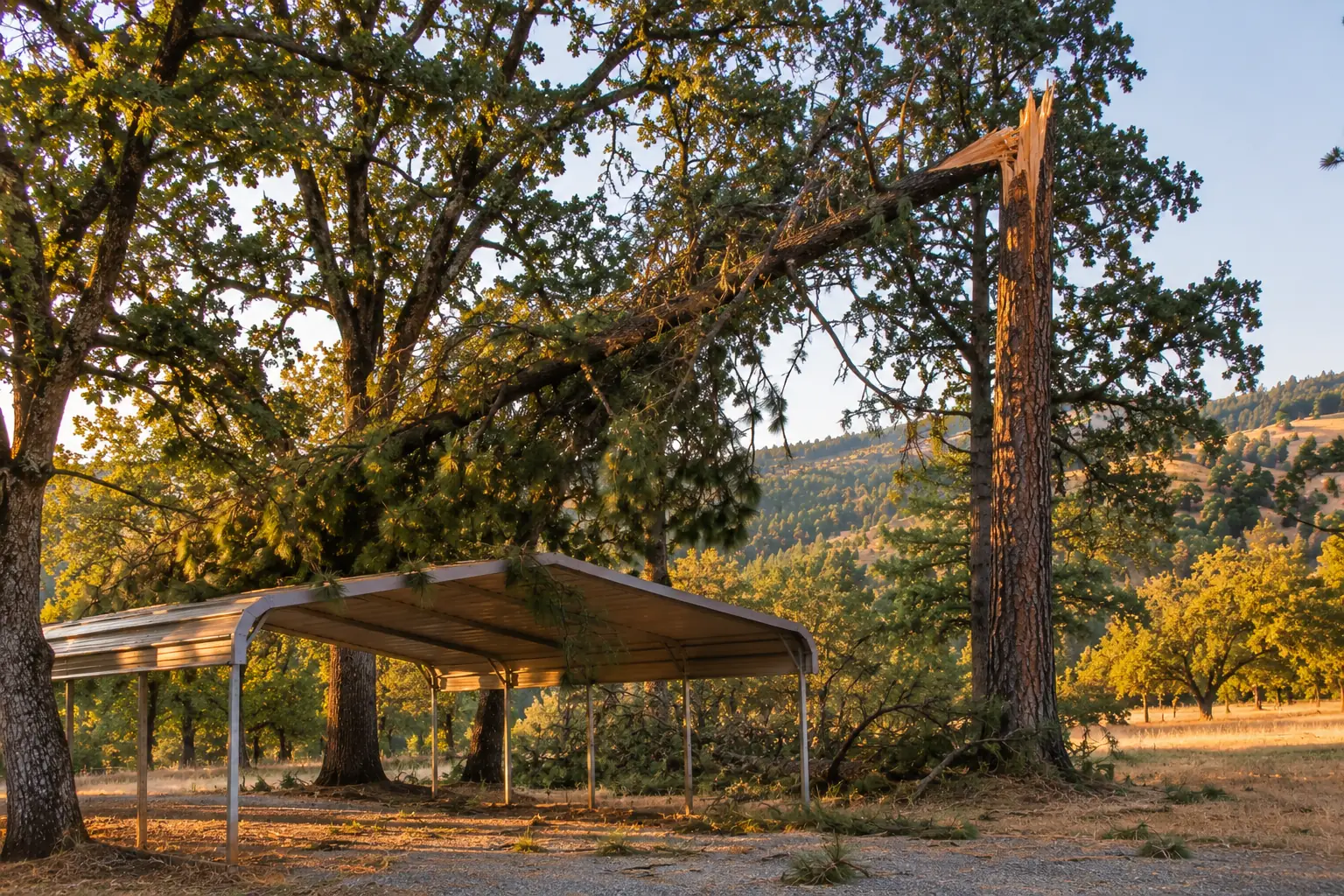
For emergency tree service in Rogue River, first move everyone away from the tree and from any wire it touches. If a power line is involved, call 911 and then Pacific Power's downed-wire line at 1-877-508-5088 before anyone else. For everything else, a free call to (541) 855-3193 reaches one independent tree service with an Oregon CCB license. No arrival time can be promised through this site, so ask on the call how soon a crew could get to you.
Urgent tonight, or safe until morning?
The box above covers what counts as urgent. The harder question usually comes at dusk or in the middle of a storm: does this need someone now, or can it sit until daylight? A few checks from a safe distance help you decide.
- Is anyone under it? A limb over a bedroom, the front door or the only path to the car means moving people to another part of the house and treating it as urgent. Over an empty corner of the yard, mark the spot off and it can usually wait.
- Is it still moving? Fresh cracking sounds, soil lifting at the base or a lean that grows with each gust mean the tree has not finished falling.
- Is weather getting in? A limb through the roof with rain on the way is a problem for tonight. A limb lying on a roof that is not leaking is not yours to drag off in the dark.
- Can you get out? A blocked driveway matters most when it is your only way to the road.
- Is a wire anywhere near it? Then none of it waits and none of it is yours to touch. The next section covers that call.
While you wait, keep people and pets indoors or well back, stay out of rooms under the tree, and do not try to prop, steady or cut anything.
Some tree trouble can wait for a normal appointment. A dead tree or a lean you have been watching for weeks, an old stump, routine trimming, fire season clearing and storm debris that is not blocking or hitting anything are all better booked as regular work. The hazard and dead tree page covers trees that worry you but have not failed.
When a wire is in the tree
Assume every wire touching a tree or a limb is live, and stay 35 feet or more back. Call 911 first. Pacific Power is the second call: its outages and safety page says never go near a downed power line, and lists 1-877-508-5088 for reporting downed wires and outages. The tree service is the third call, and it can start only once the utility says the line is safe.
Do not let anyone, including a tree crew, cut or pull limbs off a line the utility has not cleared. Pacific Power's tree page tells customers never to prune or remove trees near power lines. For the wire from the pole to your house, ask Pacific Power about the free temporary service disconnect it describes on that page before tree work starts.
The first steps, in order
Work through these before help arrives. They keep people safe and make the visit faster.
- Clear the area. Get people and pets out of any room, car or part of the yard under or near the tree. A hung-up limb can drop without warning.
- Check for wires. Look along the trunk and limbs from a distance. If a wire is involved, stay back and make the 911 and Pacific Power calls above before any other.
- Shut off what you need to. If the tree broke a gas meter or you smell gas, leave the area and call 911 from a safe spot.
- Take photos. Shoot the tree, the damage and the roofline from several angles before anything moves. Your insurer will likely want them.
- Call your insurer. Ask what the policy covers for tree removal and roof repair, and whether it needs to approve the company first.
- Call (541) 855-3193. Say what the tree hit, whether wires are involved, and how the crew can reach the house.
What an emergency visit usually involves
The first visit after a storm is often about making things safe, with full cleanup sometimes later. A tree service on an urgent job may:
- Look at the tree from the ground and decide what can be cut first without shifting the load onto the roof.
- Lift or lower the trunk off the structure in sections, using ropes or, for large trees, a crane.
- Cut a path through a driveway so cars and emergency vehicles can pass.
- Bring down a hanging limb from a neighboring crown.
- Leave logs and brush in a safe pile to be hauled or chipped on a second visit.
Covering a hole in the roof is usually a job for a roofer or the restoration company your insurer sends. Ask the tree service who handles that part.
Storm pricing
Emergency work generally costs more than the same tree on a scheduled day, because of the hour, the risk and the damage the tree is sitting on. LawnStarter's tree removal cost guide, updated October 5, 2026, says emergency removal costs much more than standard removal and depends on when you call, how long the job takes and how dangerous it is. This Old House's cost guide, updated March 5, 2026, says emergency pricing can reach $5,000 and that homeowners insurance may cover part or all of it.
Before work starts, ask for a written price or a clear rate, even on a hurried job. Ask whether the price covers only making things safe or the full cleanup, and whether hauling is included. The cost guide for this area gives regular-day ranges to compare. Coverage depends on your policy, so confirm with your insurer rather than relying on any general rule.
Rules that still apply in a hurry
Most local tree rules make room for emergencies, but a few still matter.
- Creek and river banks. The city's riparian chapter has the city review hazardous tree removals within 75 feet of the Rogue River and 50 feet of Evans Creek, Wards Creek and other fish-bearing streams, except in emergency circumstances. Replacement planting may still be required afterward, so call City Hall at (541) 582-4401 once things are safe.
- Street trees. A tree in the parking strip or another public place inside city limits is covered by the street tree ordinance. If a city tree fell on your property, tell City Hall.
- Fire season. During ODF fire season, the Southwest Oregon closure rules limit chainsaw hours by fire danger level, ban saws on extreme days, and require a one-hour fire watch after saw use. The same proclamation says the State Forester or an authorized representative may approve a modification or waiver in writing. If a tree fails in summer, ask the company how it will work within those hours.
What to ask on the first call
Short questions sort out an emergency call fast:
- Can you confirm your Oregon CCB number? You can check it later on the CCB license search.
- Will someone come today, and what does that visit include?
- Is the price a fixed amount or an hourly rate, and is there a charge for after-hours work?
- Do you carry liability insurance and workers' compensation?
- Will you work with my insurer, and can you give me an itemized invoice?
- What will be left on site after the first visit?
Storms bring out door-knockers with chainsaws. Do not hand over a large deposit, and do not sign an assignment of your insurance benefits without reading it. How this referral service works explains who you reach when you call. The home page lists the other services, and the removal page covers trees that need to come down but are not on anything yet.
Frequently asked questions
Should I call Pacific Power or a tree service first?
Neither comes first when the tree touches any wire. Call 911, then Pacific Power's downed-wire line at 1-877-508-5088. The tree service is the third call, and it can start only after the utility makes the line safe. With no wire involved, call (541) 855-3193.
Will my homeowners insurance pay for the tree?
It depends on your policy and what the tree hit. Many policies treat a tree on the house differently from a tree that fell in the yard. Call your insurer before or right after the work and keep photos and invoices.
Can I cut the tree off my roof myself?
It is risky. A trunk resting on a roof can shift when cut and drop through or roll. Leave large trees on structures to a tree service with the right gear and insurance.
The tree fell from my neighbor's yard. Who pays?
That depends on the facts and on both insurance policies. Take photos, tell your neighbor, and call your insurer. This site cannot give legal advice.
My driveway is blocked by a tree. Is that an emergency?
Yes, if it is your only way in or out or it blocks emergency access. Say so on the call, since a crew can often cut a passage first and finish the cleanup later.